
English| EUR
Suggested for you
More currencies
Choose a language
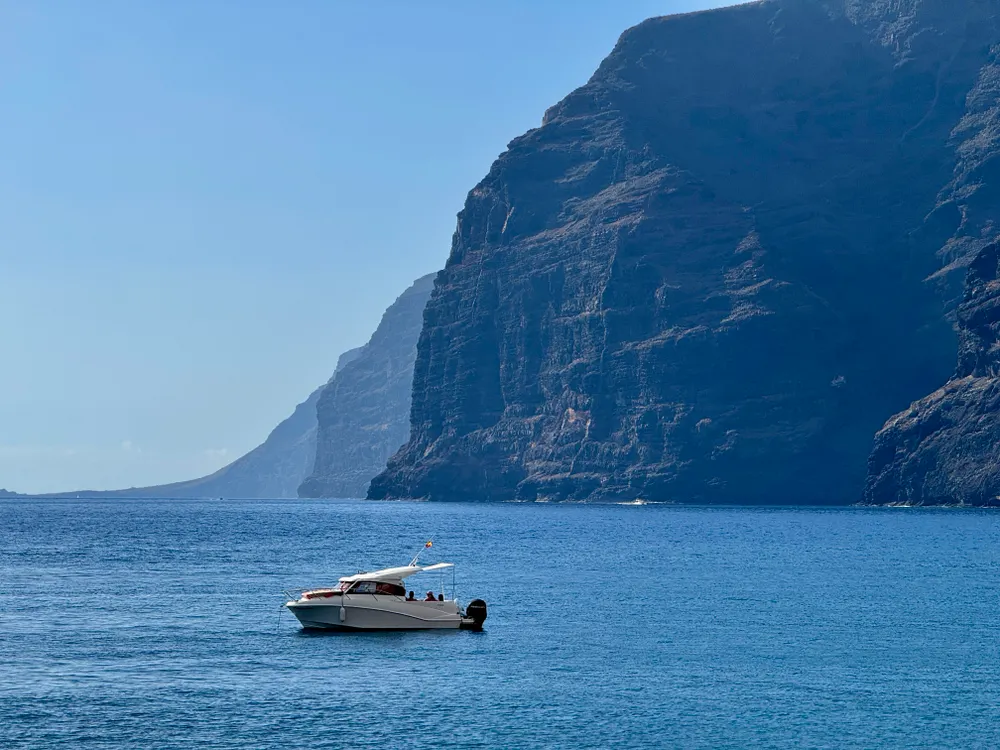
Puerto Los Gigantes serves as the launch point for boat excursions along Tenerife's dramatic west coast, where 600-metre volcanic cliffs plunge into the Atlantic. This guide covers departure logistics, whale watching windows, and what to expect from operators working out of the marina.
Quick answer
Boats depart Puerto Los Gigantes daily between 09:00 and 19:00, with individual operators setting their own schedules throughout that window. Most excursions last two to three hours and include dolphin and pilot whale watching along the cliff base. Morning departures between 09:30 and 13:00 offer calmer seas and higher cetacean sighting reliability, particularly during spring and autumn migration peaks.
The volcanic cliffs of Los Gigantes rise vertically from the seafloor, creating one of the steepest coastal profiles in the Canary Islands and a natural corridor for resident pilot whale pods. These waters host year-round cetacean populations, with short-finned pilot whales and bottlenose dolphins accounting for the majority of sightings recorded by marine biologists working the Teno-Rasca corridor. Operators run varied itineraries from the marina at Lugar Poblado Marinero. Standard routes trace the cliff base northwest toward Punta de Teno or southeast past Playa de la Arena, with swimming stops in sheltered coves where water clarity reaches 20 metres. Longer excursions may include snorkelling gear, while shorter trips focus exclusively on wildlife observation from deck. Sea conditions dictate daily routing—afternoon wind acceleration known locally as *alisios* can produce two-metre swells by 15:00, prompting most skippers to complete circuits before early afternoon. Whale watching success correlates directly with departure timing and seasonal behaviour patterns. Pilot whales feed in deep water during morning hours before moving closer to shore as the day progresses, making the 09:30–11:00 window statistically optimal for encounters. Dolphin pods exhibit less predictable movement, though sightings occur on approximately 85 percent of excursions according to operator logs. Spring months bring increased activity as migratory species pass through the channel between Tenerife and La Gomera. The marina itself operates as a working harbour with fuel docks, repair facilities, and a small passenger terminal. Boat sizes range from rigid inflatables carrying twelve passengers to catamarans accommodating fifty, with smaller vessels offering closer water-level observation and greater manoeuvrability near cliff formations. Operators cluster their kiosks along the harbour promenade, where same-day availability depends on season and weather—advance booking becomes essential during July and August when daily departure slots fill by mid-morning.
“Pilot whales feed in deep water during morning hours before moving closer to shore, making early departures statistically optimal for close encounters.”
The best arrival window is 09:30–13:00, as morning sea conditions are typically calmer, improving comfort and whale spotting reliability. Mid-day and afternoon winds often increase, which can lead to choppier waters near the cliffs.
Mild 20°C–24°C; stable seas.
Ideal balance of mild temperatures and calm ocean conditions for wildlife spotting.
Warm 23°C–26°C; low wind.
Water temperatures remain high and sea conditions are generally predictable for boat travel.
—
Mid-week morning trips often experience fewer passengers on board compared to weekends.
Verdict: For the calmest sea conditions and most reliable whale watching, plan your trip for a weekday morning between April and June or September and October.
Access to the Los Gigantes marina is free for all visitors. The cost for boat trips is determined by independent operators rather than a fixed entrance fee.
Verdict: While marina access is free, you will pay the specific rate set by your chosen boat trip operator based on the excursion type and duration.
This itinerary suits visitors booking a half-day whale and dolphin watching excursion from Puerto de Los Gigantes, typically lasting 2–3 hours on the water.
Boats leave from Lugar Poblado Marinero throughout the morning. Check in 15 minutes early to board and receive a safety briefing from the crew.
The vessel heads southwest, hugging the 600-meter volcanic cliffs. Keep your camera ready as the scale becomes apparent once you're 100 meters offshore.
The captain slows in waters frequented by pilot whales and bottlenose dolphins. Sightings are common but not guaranteed; operators follow ethical distance guidelines.
Most trips anchor in a sheltered bay near Masca or Playa de los Guíos. Water temperature averages 19–23°C; bring reef-safe sunscreen if you plan to enter.
The boat heads back to Puerto de Los Gigantes. Disembarkation takes roughly 10 minutes once moored.
Boat trips from Los Gigantes require advance booking with individual operators and proper preparation for open-water conditions.
Everything you need to know about tenerife boat trip los gigantes
Yes, many operators offer excursions focused on cetacean sightings near the cliffs. These tours often feature knowledgeable guides who can identify local species during your tenerife boat trip los gigantes.
While you can visit the harbor area, it is recommended to arrange your boat trip to Los Gigantes in advance to ensure availability. Booking ahead allows you to compare schedules and find the experience that best fits your travel plans.
Boat Trips in Costa Adeje
Read more Tickets & toursBoat Trips in Las Americas
Read more Tickets & toursAll-Inclusive Boat Packages
Read more Tickets & toursParty Boat Excursions
Read more Tickets & toursDolphin & Whale Watching Trips
Read more Tickets & toursPrivate Boat Charters
Read more Tickets & toursBoat Trips for Kids & Families
Read more Tickets & toursBoat Trips to Other Islands
Read more