
1 hr 30 min
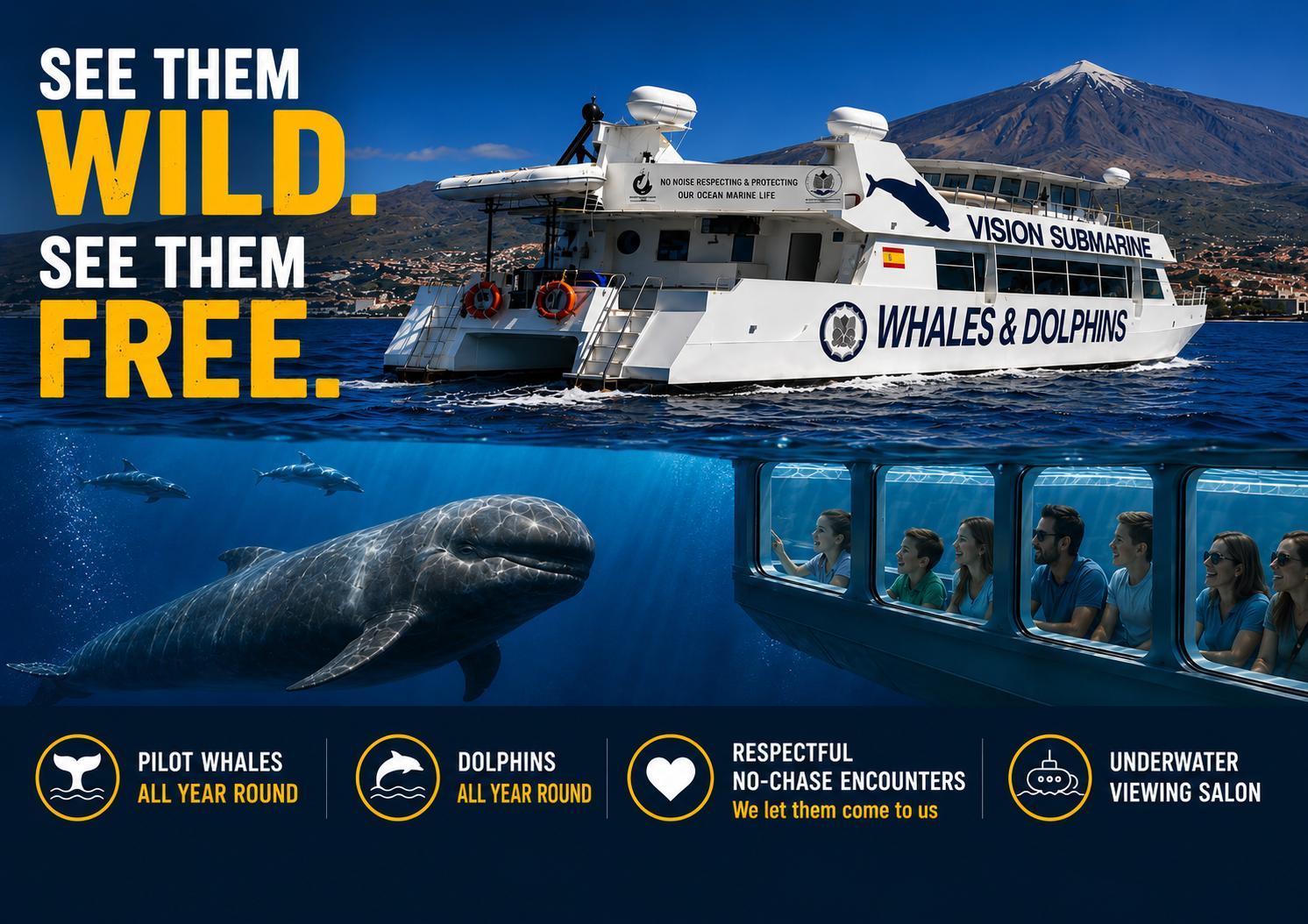
Tenerife Glass-Bottom Whale & Dolphin Encounter
Observe cetaceans above and below the waterline aboard a catamaran with exclusive underwater viewing
Reserve
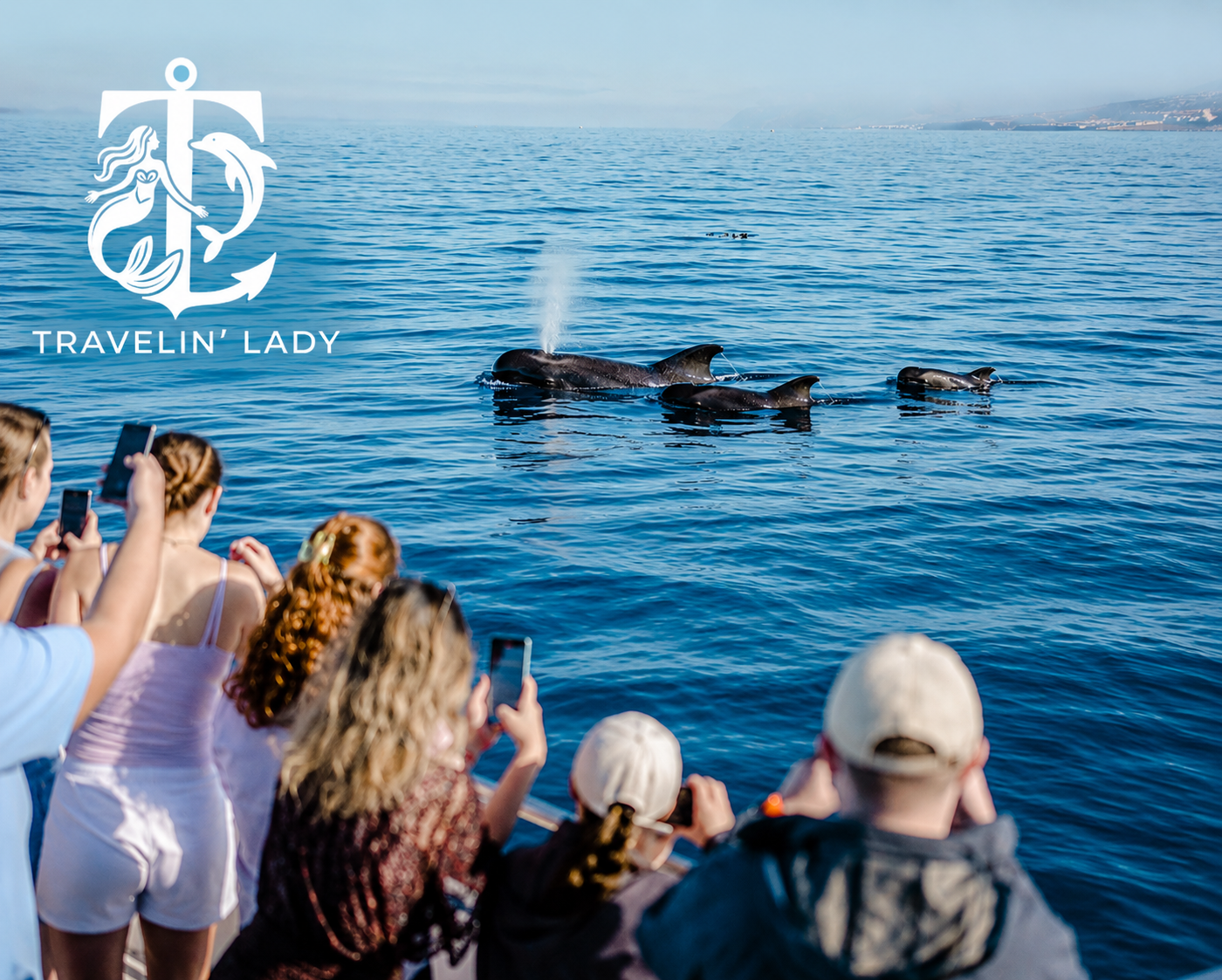
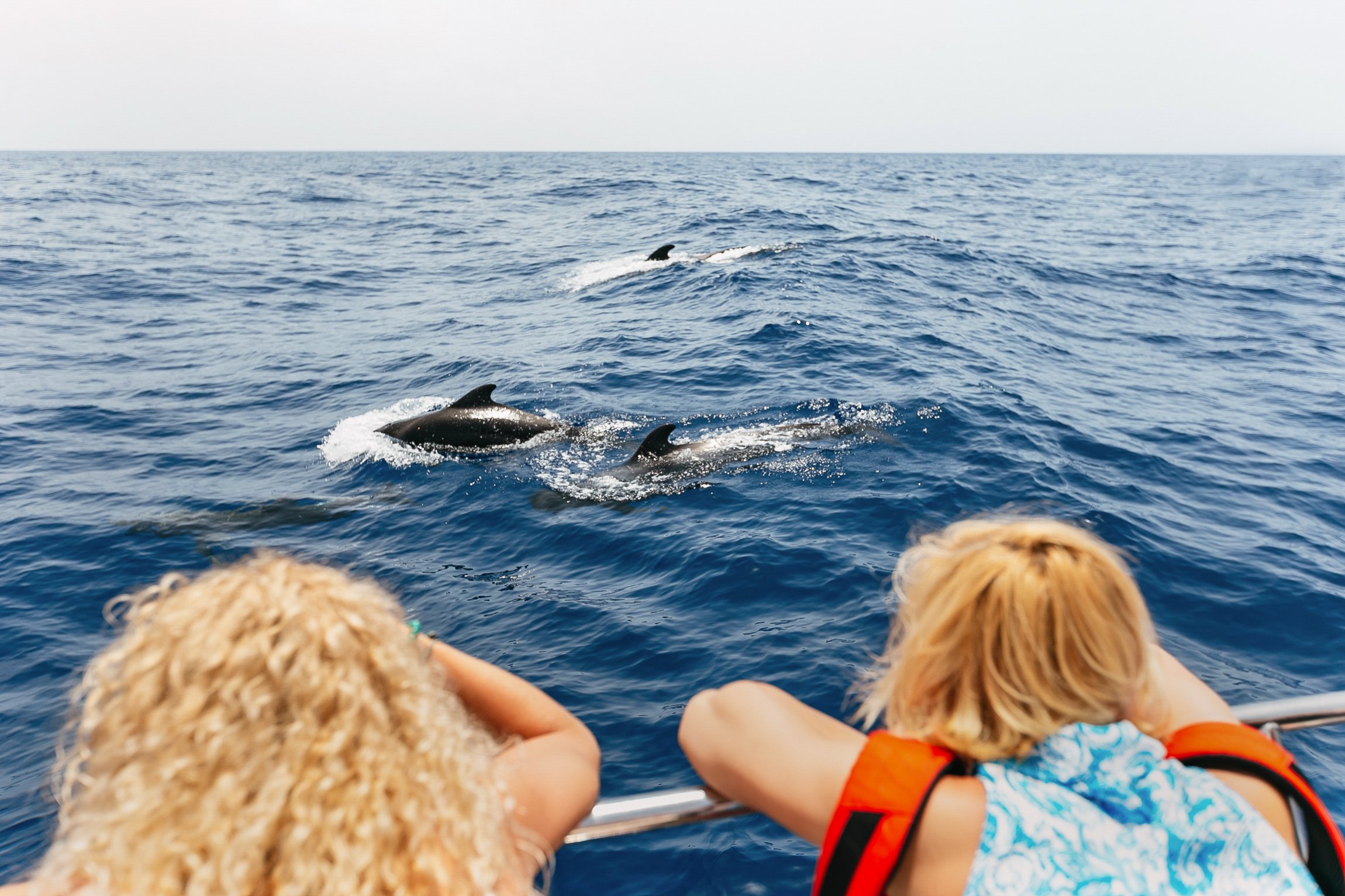
Hand-picked by our editors — only the best 5 whale and dolphin excursions from 23 operators reviewed
Verified partners for every tour, free cancellation where available, and instant confirmation on every booking.
1 hr 30 min
Observe cetaceans above and below the waterline aboard a catamaran with exclusive underwater viewing
Reserve
1 hr 30 min
Sail Tenerife's waters aboard a luxury eco-yacht to observe whales and dolphins ethically, with a swim break
Reserve
2 hr
Two-hour sailing adventure to spot pilot whales and dolphins off Tenerife's southwest coast with drinks
ReservePrices from verified partners. Availability updates in real time at checkout. Free cancellation policies apply where shown.
The landmarks, rooms, and views travelers on this tour remember — all visible on a single visit.
This is the main hub for maritime activities and serves as the primary departure point for whale watching excursions in the area. It hosts numerous local operators who provide professional boat services all year round.
The waters off the coast are home to resident pods of pilot whales and bottlenose dolphins. Tours frequently follow sustainable practices to observe these marine mammals in their natural habitat.
Evening trips from the marina provide views of the coastline as the sun sets over the Atlantic. These tours often feature drinks and relaxed atmosphere for guests.
Boats departing from the marina offer a unique perspective of the rugged volcanic landscape of the Adeje coast. From the water, you can clearly see the dramatic cliffs that define this region.
The area surrounding the boat docks features shops, cafes, and restaurants overlooking the ocean. It is a central point for visitors to congregate before or after their boat trips.
They complement each other; most visitors who do both call Los Gigantes the more dramatic experience, while Puerto Colón offers superior convenience for tenerife boat trips costa adeje tours.
| Feature | Top pick Costa Adeje (Puerto Colón) | Los Gigantes |
|---|---|---|
Departure Location |
Av. de Colón, Costa Adeje | Los Gigantes Marina |
Proximity to Whale Colonies |
Moderate travel distance | Immediate coastal access |
Variety of Boat Types |
Extensive fleet range | Primarily smaller speedboats and sail boats |
Main Tourist Facilities |
Full marina amenities available | Limited port-side services |
Atmosphere |
Busy, commercial, central | Secluded, scenic, cliff-side |
| See tickets → |
Verdict: Choose the Costa Adeje option for tenerife boat trips costa adeje tickets if you prioritize accessibility, or opt for Los Gigantes if you prefer shorter transit to the marine life habitats seen on your tenerife boat trips costa adeje tour.
Choose your ticket, select your date, and reserve in under two minutes. Secure checkout handled by our verified partner.
Instant confirmation by email, with a mobile voucher you can save offline. No printing, no queuing at a collection desk.
Arrive at the entrance, show your voucher on your phone, and walk in. Most tickets include priority or skip-the-line access.
Practical details for your visit straight from our verified partners — hours, access, rules, and how to get there.
Av. de Colón, 38660
Check your voucher for the specific pier number.
Titsa bus lines 467 or 471 stop near Puerto Colón.
Ample paid parking is available directly within the marina complex.
Wear comfortable clothing suitable for a maritime environment and consider light layers for cooler sea breezes. Rubber-soled shoes are recommended to maintain grip on boat decks.
Keep belongings minimal as space on vessels is limited. Secure items in waterproof bags to protect them from ocean spray during your tenerife boat trips costa adeje.
Capture your whale and dolphin watching experiences freely from the deck. Ensure your camera equipment is secured with a strap to prevent accidental drops into the Atlantic.
Many operators at the marina offer assistance for those with limited mobility. Contact your specific provider in advance to verify ramp access for your selected tenerife boat trips costa adeje.
Mobile service is generally reliable while close to the coast. Be mindful that signals may drop further out at sea during excursions.
The marina is a family-friendly hub with various boat operators catering to all ages. Children must remain supervised on the docks and while aboard the vessels.
Numerous cafes and restaurants operate within the marina complex for pre-trip refreshments. Many operators include snacks or beverages as part of their boat tour packages.
Pets are typically not permitted on boat tours for safety reasons. Check with your specific operator before arrival at the marina.
The marina is the primary departure point for whale watching in the Canary Islands. Confirm your meeting point inside the marina as individual operators use different docks.
Av. de Colón, 38660
Check your voucher for the specific pier number.
Get directionsBest time to go, insider tips, nearby landmarks, and the cancellation fine print — flip through to skim what matters to you.
How crowds, weather, and events shift across the year.
Mild temperatures and calm seas make this ideal for spotting pilot whales.
Small details that turn a good visit into a great one.
Secure your tenerife boat trips costa adeje tickets online during peak seasons to guarantee availability.
Non-bookable sights within a short walk — free to visit, easy to pair.
A accessible beach perfect for relaxing after your trip.
Flexible, no hidden fees.
Cancellation terms depend on the individual tour operator chosen for your tenerife boat trips costa adeje. Please review your specific booking confirmation for refund windows, as entrance to the marina area itself is 0 EUR.
Hand-picked options within walking distance — pick a district for vibe, or a specific hotel for convenience.
Puerto Colón marina shelters one of Europe's highest-density cetacean habitats — twenty-one resident pilot whale pods and eight bottlenose dolphin communities occupy the channel between Tenerife and La Gomera year-round. The volcanic topography drops to 2,000 metres within three nautical miles of the Costa Adeje shoreline, creating nutrient upwellings that anchor these populations in predictable corridors. Since 1991, Spanish maritime law has designated this eight-kilometre coastal strip as a marine mammal sanctuary, limiting vessel speeds and mandating observation distances that shape how boat operators design their routes. Tenerife boat trips Costa Adeje depart from a purpose-built marina complex where Avenida de Colón meets the Atlantic. The facility opened in 1985 as a fishing cooperative dock and converted to recreational use in 1998 when the Canarian government formalised whale-watching licences. Today, forty-three vessels hold sanctuary permits, but only seventeen meet the Blue Boat certification standard — a voluntary eco-rating that prohibits engine idling near pods, requires marine biologists on three-hour or longer sailings, and mandates biodegradable hull coatings. Operators display these credentials on boarding ramps; the certification seal appears as a blue pennant with a pilot whale silhouette. The boat types vary by passenger capacity and viewing method. Glass-bottom catamarans seat forty to sixty and position transparent hull sections over shallow reefs near La Caleta, where parrotfish and damselfish cluster around volcanic rock formations. Single-hull yachts carry twelve to twenty passengers and prioritise speed, reaching the pilot whale feeding grounds in twenty-two minutes against a catamaran's thirty-eight. Rigid-hull inflatables, limited to eight passengers, operate under a separate permit class that allows closer approaches — fifty metres versus the standard seventy-five — because their quiet outboard motors produce less acoustic disruption. All vessels carry hydrophones that broadcast cetacean vocalisations through deck speakers, turning sightings into auditory encounters. Tenerife boat trips Costa Adeje tours run on three schedules aligned with marine behaviour patterns. Morning departures between 09:00 and 10:30 target feeding activity when pilot whales surface near sardine schools. Midday sailings, 11:30 to 13:00, prioritise swim stops at Puertito de Armeñime cove, where calm water and designated buoy lines create safe snorkelling zones. Afternoon slots, 15:00 to 16:30, offer optimal light angles for photography — the westward sun illuminates dorsal fins and blowhole spray without lens flare. Booking data from Puerto Colón's harbour master shows morning trips achieve a ninety-two percent sighting rate for pilot whales and seventy-one percent for bottlenose dolphins, while afternoon sailings reverse those figures as dolphin pods move inshore to hunt mullet.
"Twenty-one resident pilot whale pods occupy the channel between Tenerife and La Gomera year-round, anchored by volcanic upwellings within three nautical miles of shore."
A step-by-step walkthrough of the visit — what you'll see, how long each stage takes, and the details that matter.
You board at Puerto Colón's floating pontoons, where crew check your mobile voucher and assign seating by vessel type — bow benches for catamarans, cushioned stern lounges for yachts. The captain briefs sanctuary rules as the boat clears the breakwater: no sudden movements when whales surface, no touching marine life during swim stops, hydrophone silence during broadcasts. Within eighteen minutes, the first blowhole spray appears 200 metres off the port side — a pilot whale pod of seven adults and two calves, identifiable by their bulbous foreheads and charcoal skin. The engine cuts to idle. You drift alongside the pod for twelve minutes while the marine biologist narrates feeding behaviour — pilot whales dive to 400 metres chasing squid, then rest at the surface in tight formations called resting lines. A calf breaches twice, its two-metre body rotating before it slaps back into the Atlantic. The hydrophone crackles with clicks and whistles, the whales' echolocation pings audible as metallic chirps. On glass-bottom vessels, you descend to the lower viewing deck where transparent panels reveal a different seascape — golden sardine schools, black volcanic boulders colonised by purple sea urchins, a lone loggerhead turtle gliding through kelp ribbons. The swim stop at Puertito lasts thirty minutes. You enter via a stern ladder into 23-degree water, snorkel over a sandy plateau dotted with starfish, then return to deck for the transit back to Puerto Colón. Dolphins often escort the final kilometre, riding the bow wake in parallel lines.
The marina area is open daily from 00:00–23:59. Specific operator boat trips operate throughout the day.
Yes, but booking your tenerife boat trips costa adeje tickets in advance is recommended to ensure a spot.
Most operators welcome families, but check specific tenerife boat trips costa adeje tour requirements for young children.
Yes, the marina is accessible to the public with a 0 EUR entry fee to the area.
The best time for whale and dolphin watching is the 09:00–17:00 arrival window.
Digital tickets on your mobile device are usually accepted for most tenerife boat trips costa adeje tours.
Many operators include water or light snacks; confirm details with your chosen provider for your tenerife boat trips costa adeje.
Yes, paid public parking is available within the Puerto Colón marina complex.
Contact your operator directly as they manage refunds for your tenerife boat trips costa adeje based on their policy.
Yes, you can easily combine your visit with nearby beaches like Playa de Bobo or local shopping.